External links from respected third-party websites confer authority, relevancy, and trust to your store. Link building can boost your SERP position for your target keywords.
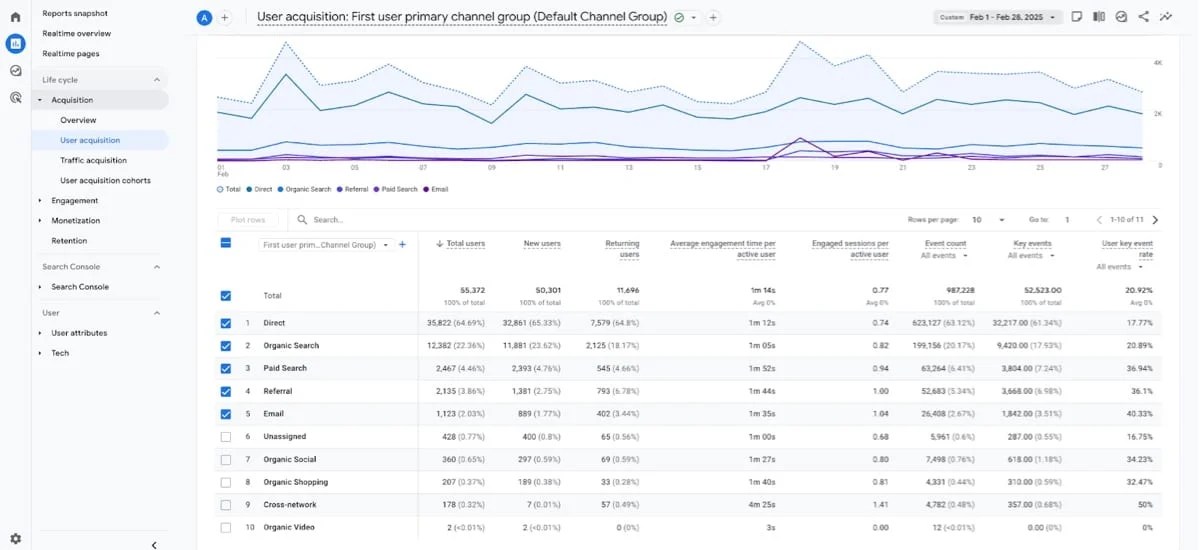
Here’s a screenshot of some of the data you can see in Google Analytics:
You can also perform a link gap analysis, using Link Explorer’s Link Intersect tool. This tool analyzes your site to identify domains that link to your competitors. You can then reach out to these sites as part of your link building strategy.
The next place to put keywords is in the subheadings of your pages. In terms of size, these are labeled from H1 to H6, with the primary headline being H1. Especially for H2 and H3 subheadings, using the main keyword or variations of it now and then is a good ecommerce SEO strategy.
Fortunately, there are plenty of WordPress security tools that can protect your site against hackers.
Let’s explore them in more detail.
Once you’ve identified the keywords that you want to rank for, use them throughout your content. This will help draw people to your site who are searching for these phrases.
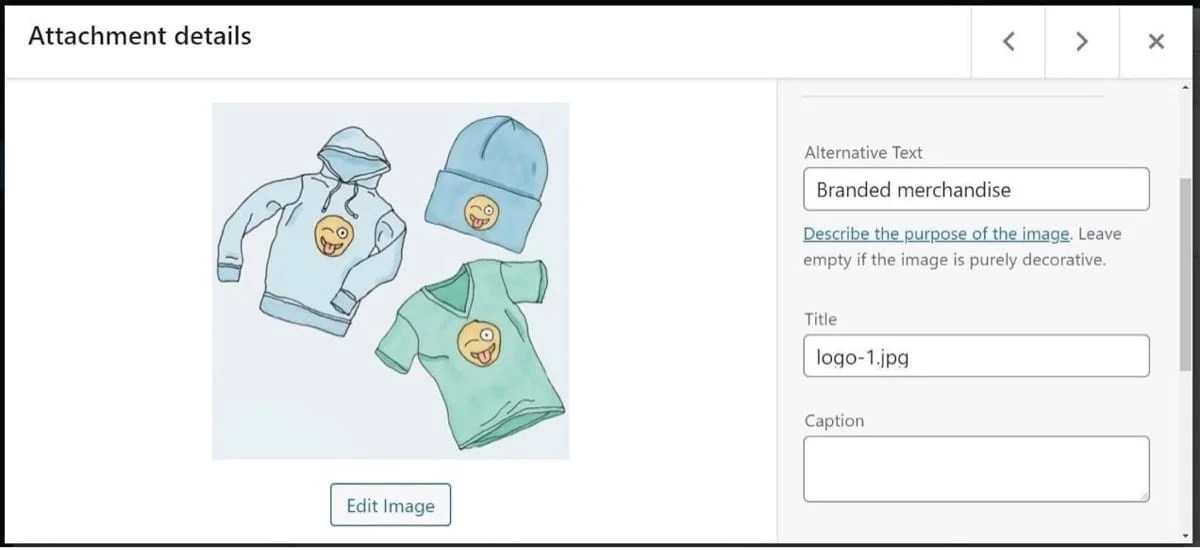
You can add alt text in several ways. First, you can use the WordPress Media Library. Simply find the image you want to edit, then add your text in the “alternative text” box.
When you perform a web search, scroll to the bottom of the search results page. There, you will see a list of about eight words under the “People also search for” heading.
This process is known as ranking. When it comes to determining which pages to rank, search engines consider lots of different factors, including the user experience, the reputation of the site, and the page itself (measured, in part, by the number of other sites that reference or link to it). Google may also consider factors outside of your control — like a visitor’s previous browsing history or their physical location.
Stocking your online store with high-quality, desirable products is only part of building a successful and profitable online business. You also need to help shoppers discover your ecommerce website and find the items they want. That’s what ecommerce search engine optimization (SEO) makes possible.
A consistent publishing schedule also demonstrates that you’re regularly contributing valuable, unique information to the web.
All of these are problems and when a hiker deals with them one too many times, they’ll look for solutions. “My water bottle leaks” is a search term, for example.
Let’s take a look at some of the most common terms you’ll hear when it comes to ecommerce SEO:
This is one purpose of image alt text — it’s another valuable place to add keywords. In addition to strengthening your ecommerce SEO, this off-page use of keywords also increases the chances of your product images appearing when potential buyers perform an image search.
Using the earlier example, “above ground swimming pools for sale” may be a great keyword, but it’s a terrible headline for a page.
This involves a few broad categories of work — we’ll call them technical SEO, content SEO, and off-site SEO.
In this post, we’ll discuss what SEO is and how it helps ecommerce stores increase website traffic and revenue. We’ll then cover the SEO basics for ecommerce sites and show you the exact steps that will help more shoppers find your online business idea. Let’s get started!
You can examine your ecommerce analytics using a tool like Google Analytics. Chances are that organic search will be a top acquisition source.
But don’t misunderstand — you can’t just put relevant keywords on a page and call it a day. That’s just the start. Keep going through this guide and you’ll learn everything you need to know to make your ecommerce site rank higher in Google search results.
Crawling
Ideally, you want shoppers to find any product within three clicks. How is this possible? Here’s the structure, starting from the homepage:
As your ecommerce business grows, you may start running paid ads to specific product pages for your high-selling merchandise. By building these pages with best practices from the start and structuring your site in a simple way, your ads will be much more effective.
Get the idea? And in each blog post, include internal links to your product pages or a category page for your best water bottles related to that topic.
Ranking
We won’t talk much about off-site SEO in this article, but you can learn more about that later. It’s most important to focus on your site’s content and technical performance before investing heavily in any off-site efforts.
Site performance
For example, “swimming pools” is a general keyword. There are all sorts of reasons someone might search for that term. But “above ground swimming pools for sale” is a more specific keyword. The search intent is clear — this person is shopping for above ground swimming pools.
Content
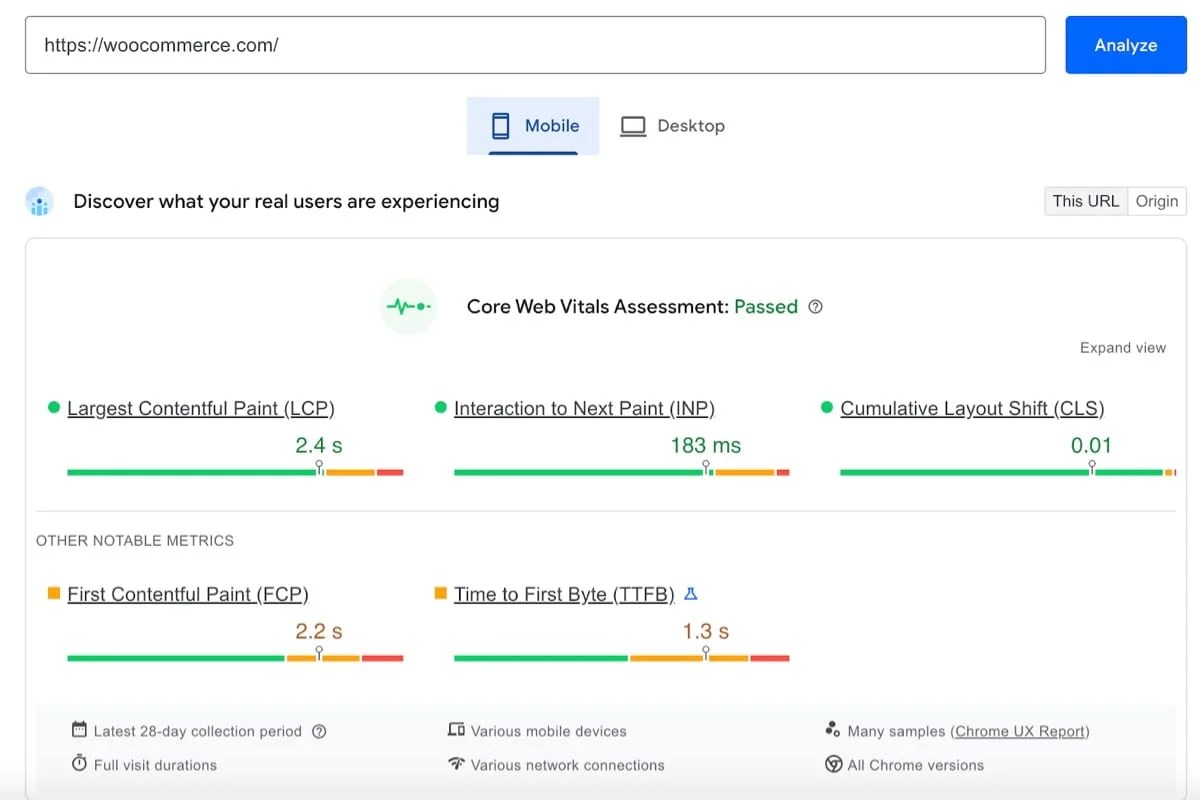
Want to get an idea of where you stand? PageSpeed Insights will run a site audit, show you how quickly your site loads on desktop and mobile, then provide actionable steps for improvement.
When your site naturally shows up as one of the results and someone clicks on it, this is known as organic traffic. It happens naturally because the search engine suggests your site as something helpful to the individual.
Every web page should feature a primary keyword, which is the one you want the page to rank for.
Keywords
Even if your improvements don’t directly impact your SEO, a good user experience encourages people to spend more time on your site. This will contribute positively towards your SERP position and help you rank higher.
Alt text
Also known as meta tags, the page title and meta description are the primary tools at your disposal to convince a searcher to click through to your page. So include an enticing summary, your target keyword phrase, and a call to action for your target audience.
Page title
And remember: screen readers use alt text so potential customers with visual impairments will be able to understand the images as well.
Meta description
Let’s take a look at a few tools that help you implement the strategies we discussed here.
They will then display the average search volume for each keyword and suggest some alternatives. This can help you pinpoint potentially lucrative words and phrases.
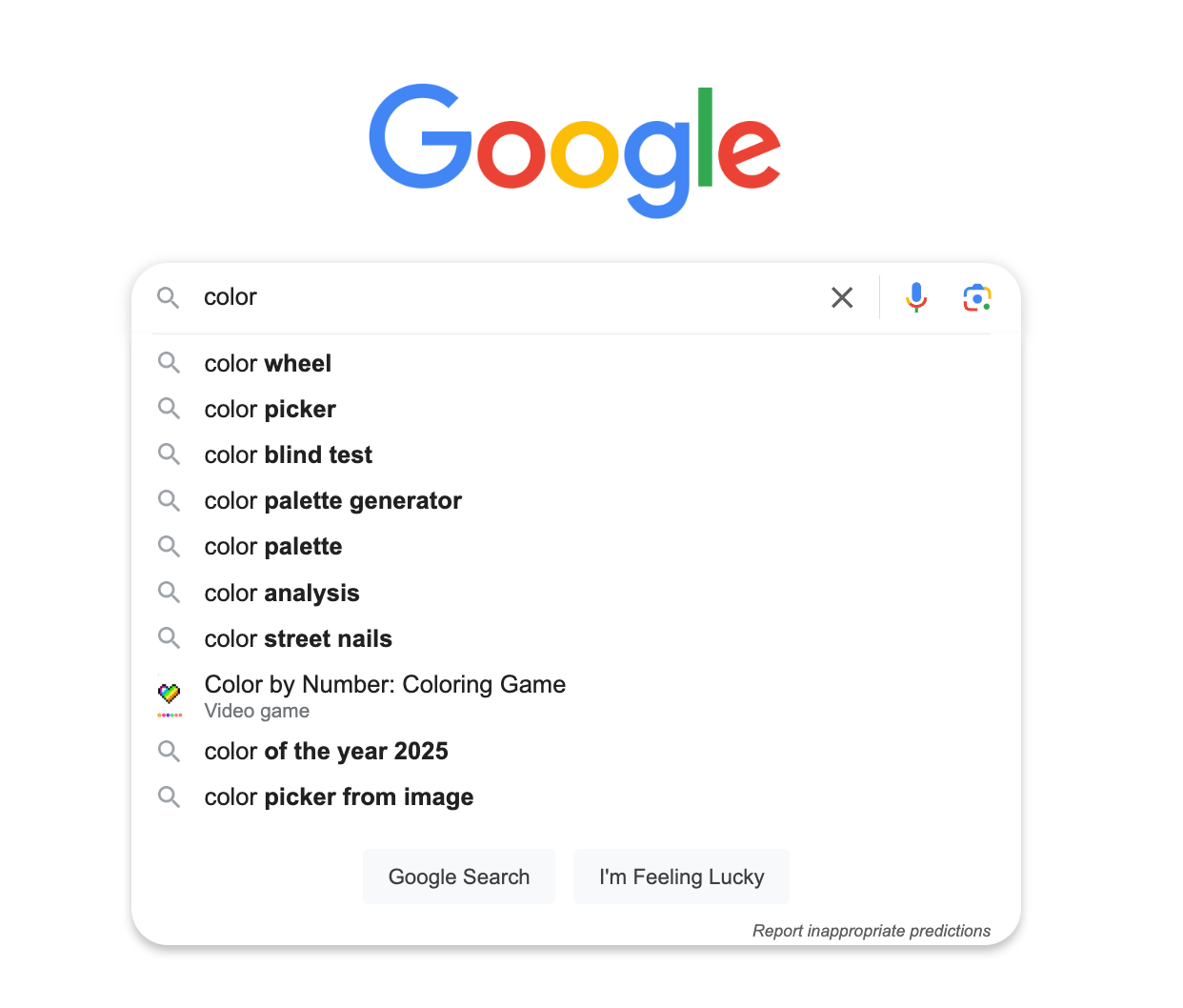
For example, by typing in “color,” autofill suggests terms like color picker, color wheel, color analysis, and color by number.

Backlinks
Someone looking for baseball mitts would click on sports gear, then baseball, and then mitts.
Internal links
The best way to earn backlinks is to produce engaging and shareable content such as blog posts, videos, quizzes, and infographics. Making a video takes a bit more effort, but once you have one, you can repurpose it on social media channels like YouTube and Facebook, which will draw even more traffic to your ecommerce site.
Ranking factors
Think shirts that come in five colors and three sizes. Does each of those 15 combinations have its own URL? If so, you’ll have a lot of duplication, because your product descriptions for all of them may be the same.
For your ecommerce site, these are potentially valuable keywords.
You can also add input text when you add an image to a page. Simply select the image and open the Settings panel at the top right.
You can also pay to show up when someone searches for a particular keyword. When you do this, every time someone clicks on your site, you’ll be charged a fee. This is known as pay-per–click advertising.
The Jetpack plugin is packed with functionality, including features that can help you optimize your site. As previously mentioned, your site’s speed plays a huge role in your search engine rankings. Jetpack offers speed features like:
Blogs offer an outstanding opportunity to draw consumers to your ecommerce site who aren’t searching for something to buy.
In addition to products, try typing problems your products solve. Let’s return to the swimming pool example. Try typing in “dirty pool” and see what autofills. On this particular occasion, search results included “dirty pool water” and “dirty pool filter.”
If Google sees that multiple pages are essentially the same, such as a mobile and desktop version of your homepage, it will attempt to determine which should be considered the primary, or canonical page and which is just duplicate content.
Links between two different web pages of your ecommerce store. An internal link helps visitors find related content and can therefore boost ranking criteria like session duration. Internal linking also helps search engines better understand how your content is related.
Each page should also use a different primary keyword. Otherwise, Bing, Yahoo, and Google won’t know where to send people who search for that term.
So far, this guide to ecommerce SEO has covered basic principles. But as mentioned earlier, keywords alone aren’t enough. In this section, we’re going to look at some additional tips and strategies.
While it’s tempting to try and crack the code, you’ll often get far better results by focusing on the user experience instead of worrying about what happens when bots crawl your site. For example, cutting your page load times will boost your Core Web Vitals score.
Here’s another example. Suppose your ecommerce website sells sports apparel and equipment. You might have category pages such as clothing, sports gear, and outdoor gear.
Every blog post can also offer visitors a chance to sign up for your email list, which allows you to follow up with email marketing from that point on. That gives you more time to win them over and convert them into paying customers.
LSI keywords
But in general, it’s best to focus on highly-specific keywords that have a decent search volume. Usually, the more popular the term, the greater the competition. With this in mind, evaluate how difficult it will be to beat sites that currently rank in Google and other search engines for these keywords.
As you can see, SEO is a big task. But it’s worth learning how to fine-tune your site even at a basic level, because it can draw in huge amounts of traffic, ultimately leading to more sales.

Let’s say that, in the body of your page, you create an internal link to another page. There’s a good chance you’re linking to that page, in part, because of its focus keyword.
Long tail keywords
Search engine optimization is the process of improving your website’s visibility on search engines like Google, Bing, and Yahoo when people are actively looking for what you sell.
For example, consider again an ecommerce website selling outdoor gear. What are some problems and frustrations that hikers face?
If you’re lagging behind in the search engine results, then you’re almost certainly missing out on sales. By optimizing your online store for Google, you can climb those all-important search engine rankings and increase your revenue.
The process starts with crawling. This is where search engines send bots to discover new and updated content. Whenever bots discover fresh information, they add it to a database known as an index.
Autofill
Those are called latent semantic indexing (LSI) keywords. For example, a search for the keyword “soccer ball” resulted in LSI keywords such as “soccer balls size 5,” “FIFA soccer ball,” “youth soccer ball,” “custom soccer ball,” and several other terms.
Internal links can also impact your ecommerce SEO. A logical site structure allows customers to find related content faster. This can boost session duration and the number of pages visited per session.
Let’s take this post from Jetpack as an example. The title is “How to Optimize WordPress for Mobile Devices in 17 Easy Steps,” but instead of simply adding this entire phrase to the URL, they went with /wordpress-mobile-optimization/. It’s simple to remember, and straightforward for search engines and site visitors to understand.
Most pages start with a title, better thought of as a headline. Note that this is what shows up to visitors on the page or post. While this is a perfect opportunity to include relevant keywords, the title also needs to convince visitors to read further.
Kevin has been with Woo since 2014, representing multiple functions over the years. He currently works on the growth team, specializing in paid media, SEO, and analytics. When not serving up ROI, Kevin can be found playing guitar and hanging at lake Tahoe with his yellow lab, Ollie.
Since the body of the page is where most of the text will be, this is where you can introduce secondary keywords, keyword variations, and other terms that you may feature more prominently on other pages.
Why would you want to do that?

As you write, keywords should emerge as a natural outcome of your explanations, product descriptions, product benefits, and other messaging.
Instead of letting Google guess and make mistakes, you can get ahead of the process by specifying these yourself. You may want professional help to do this, but Google has a guide to canonical tags to get you started.
Product-based keywords
How much can SEO impact your ecommerce site? 98% of people use a search engine every month. And it’s estimated that Google users perform more than 16.4 billion searches every single day.
Your keyword research should always involve long tail keywords. Sometimes, you arrive at these just by thinking about it for a bit, as in the above example.
Search engines want to keep their users safe. Therefore, any malicious activity or questionable material can undo all of your ecommerce SEO wins.
If your site has the largest library of information about cat-themed onesies, Google will be more likely to send people to your ecommerce store when they make a related search.
You can also sync your account with Google Analytics for improved data and information.
Primary keywords
Product and category pages are a valuable part of your site architecture, and each one needs the same consideration as the rest of your pages.
Make it simple for someone to browse and shop your site and you’ll make more sales. From an ecommerce SEO standpoint, you’ll also get more traffic because when bots crawl your site, they’re trying to make sense of it. If they can easily tell how pages relate to one another through your internal link structure, they’ll rank those pages higher.
When an external site links to your online store. Search engines count these backlinks as an endorsement of your store’s content, making them a valuable addition to any optimization strategy.
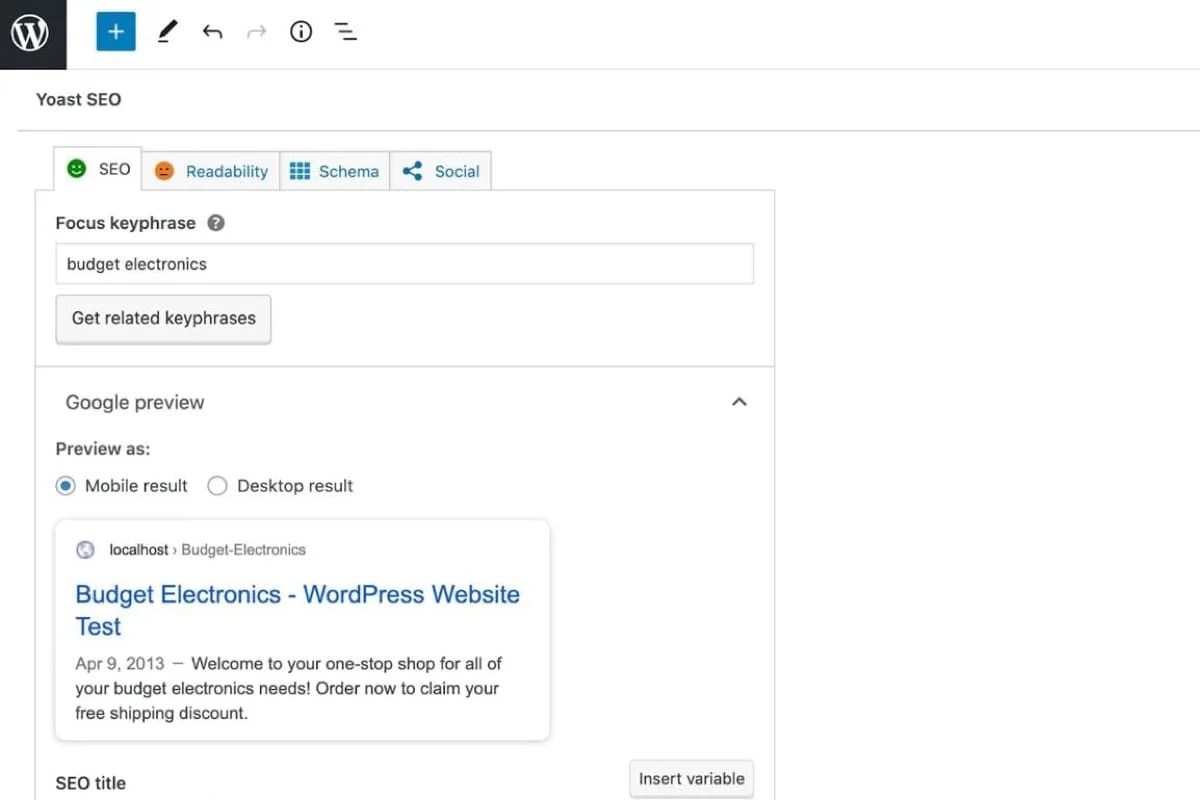
Keyword density refers to the number of times your focus keyphrase appears in your copy, compared to the total word count. For the best search results, aim for Yoast’s recommended keyword density.
This article will focus mostly on content SEO, but we will get into some of the technical aspects too — such as site architecture — because there are particular elements related to ecommerce stores that can make a big impact.
Additionally, avoid keywords that have very few searches. If no one is interested in a particular keyword, it’s unlikely to deliver significant organic traffic. However, there are exceptions to this for ecommerce sites.
The SEO page title
Simply type your own products into the search bar and see what shows up. Among the autofilled search terms, you’ll find some valuable phrases. You can optimize web pages, blog posts, and perhaps product and category pages using those terms.
The point being, don’t just shrink your headline or page title and make that the URL. Focus your URLs around your main keyword and perhaps a few choice companion words that tell more about the intent of the page.
As an online store, it’s smart to focus on transactional search queries as opposed to informational ones.
The on-page title
If you take some time to learn how to use ecommerce SEO to your advantage — even at a basic level — then you won’t have to spend as much of your marketing budget paying someone else to do it. You can do a lot of the work to achieve organic rankings on your own.
Google Search Console is one of the best ecommerce SEO tools, as it provides a way for you to communicate directly with Google about your website. In the Google Search Console dashboard, you can see how you stack up in the search engine results pages, submit your sitemap to Google, ask Google not to index certain pages, and more.
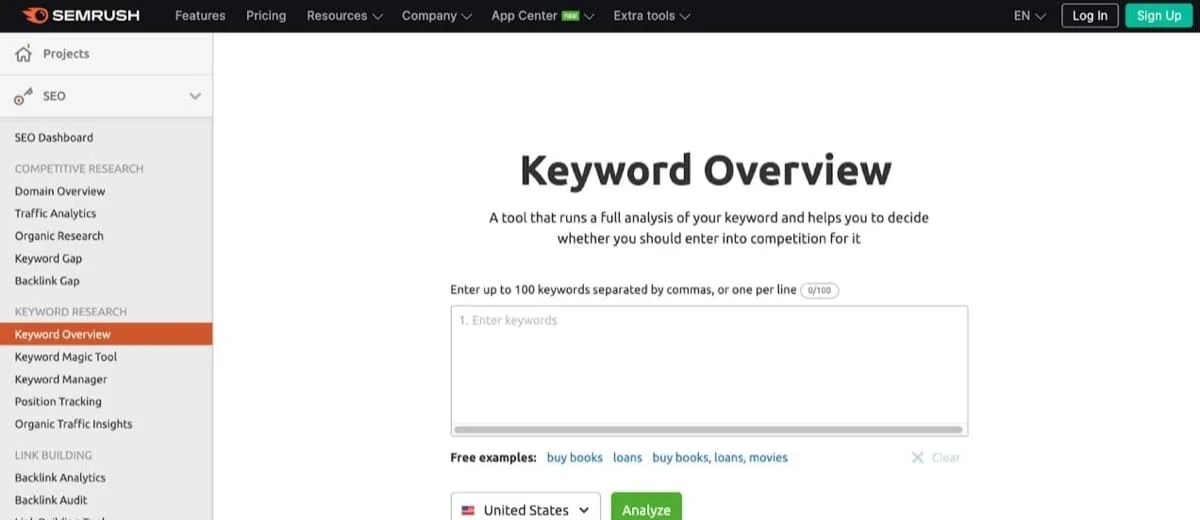
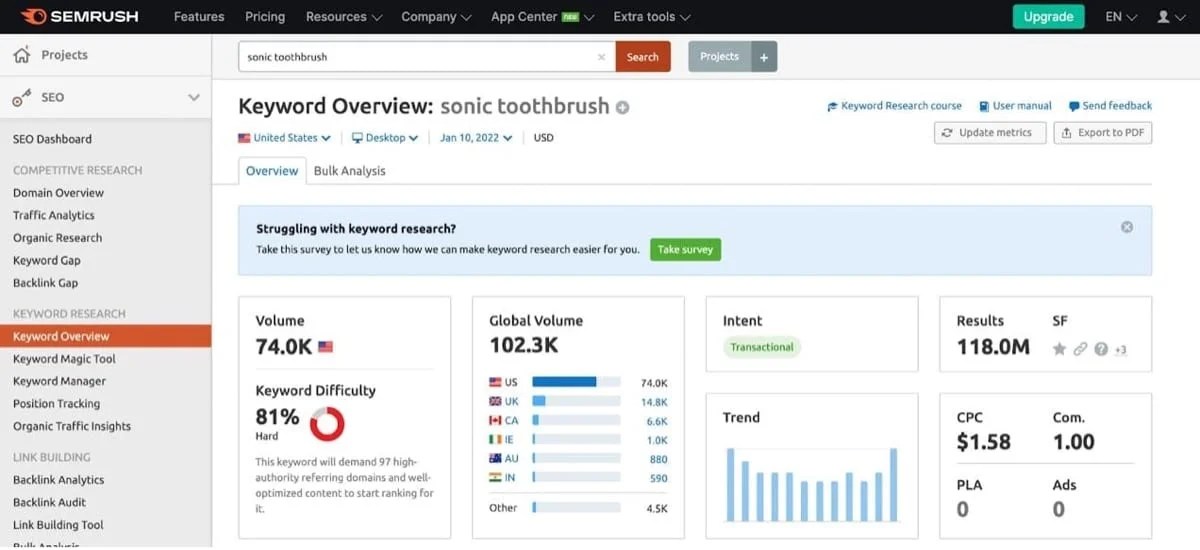
Keyword research is the cornerstone of any successful ecommerce SEO strategy. To help you identify high-converting keywords, use a tool like Keyword Overview. You can then deploy these phrases throughout your content, including your URLs, meta descriptions, images, and all the other places discussed earlier.
The URL
Like LSI keywords, the search terms appear here because enough other people have typed in those keywords. So, Google’s algorithm is guessing you might be looking for them, too.
You can then modify your on-page SEO to target this phrase, and Yoast gives a few recommendations for ways you can do this.
What can you do?
Keyword research tools such as SEMrush and Google Keyword Planner can provide all sorts of helpful data.
When shopping online, customers can’t physically touch your items. To compensate, you’ll want to provide lots of high-quality product photos.

Images, photos, and graphics
Canonicalization means that, from the crawler’s perspective, similar pages can appear as if they redirect to one page. So you might have URLs ending in productname/brown, productname/black, productname/pink, and productname/blue. But really, these pages are all the same.
The problem for ecommerce businesses is that product and category pages tend to feature a lot of the same language on every page, resulting in duplicate content issues.
It’s also important to make your title compelling. What will encourage people to click if all they see is the title in search results?
Describe the product. Talk about its features. Discuss the problems it solves or how it makes someone feel after using it. As you do this, you’ll naturally end up using keywords related to the product. And you might also do a better job of selling, too.
On your product pages, especially for less well-known products, sometimes using the actual product code will land you the best visitors.

When you type anything into Google’s search bar, it autofills with a list of keywords that it thinks you’re looking for. The more you type, the more the list changes and the longer the terms get.
That’s how blogs help make ecommerce sales and they’re a major part of what’s referred to as content marketing.
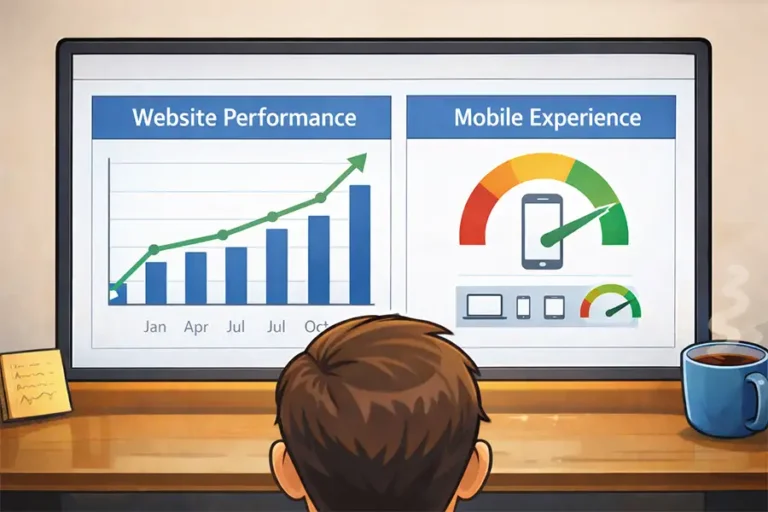
Google also considers performance, with Core Web Vitals metrics as their benchmark. This project measures how visitors perceive the speed, responsiveness, and visual stability of a webpage. While there are many different aspects of search engine optimization, you should pay special attention to your store’s performance.

The words or phrases that potential website visitors enter into search engines. For example, if you sell customized power tools, you’d want to show up when someone searches that phrase on Google, Bing, or Yahoo.
Subheadings
Jetpack also offers an AI Assistant that’s built directly into the WordPress block editor. It can help you craft and refine new content, write meta descriptions, write alt text, and more.
See all of the Jetpack plan options.
The body of the page
There are many steps you can take to boost your site’s performance. This includes choosing a hosting provider that prioritizes speed and installing a caching plugin like WP Super Cache. You can also use the Jetpack features mentioned earlier, such as a CDN and core web vitals tools.
This can be a delicate balance because, ideally, you’ll put your main keyword in the headline. However, it’s also unwise to prioritize keywords at the expense of creating an eye-catching title.
Keep in mind that some keywords don’t naturally work in normal sentences, so hitting that density figure isn’t always possible. The user experience should always be your top priority.
Internal and external links
Search engine optimization takes a lot of time and effort. But fortunately, it’s absolutely possible to climb the search engine result pages (SERPs) and claim that number one spot on Google for the products you sell. By applying search engine optimization techniques to your online store, you can increase your visibility and your sales.
And if you want to hire an ecommerce SEO company to guide you along the way, check out our list of Woo Agency Partners.
An effective meta description should motivate the reader to click through to your site. That’s its job. So, you may want to highlight incentives like low prices or free shipping in addition to product benefits.
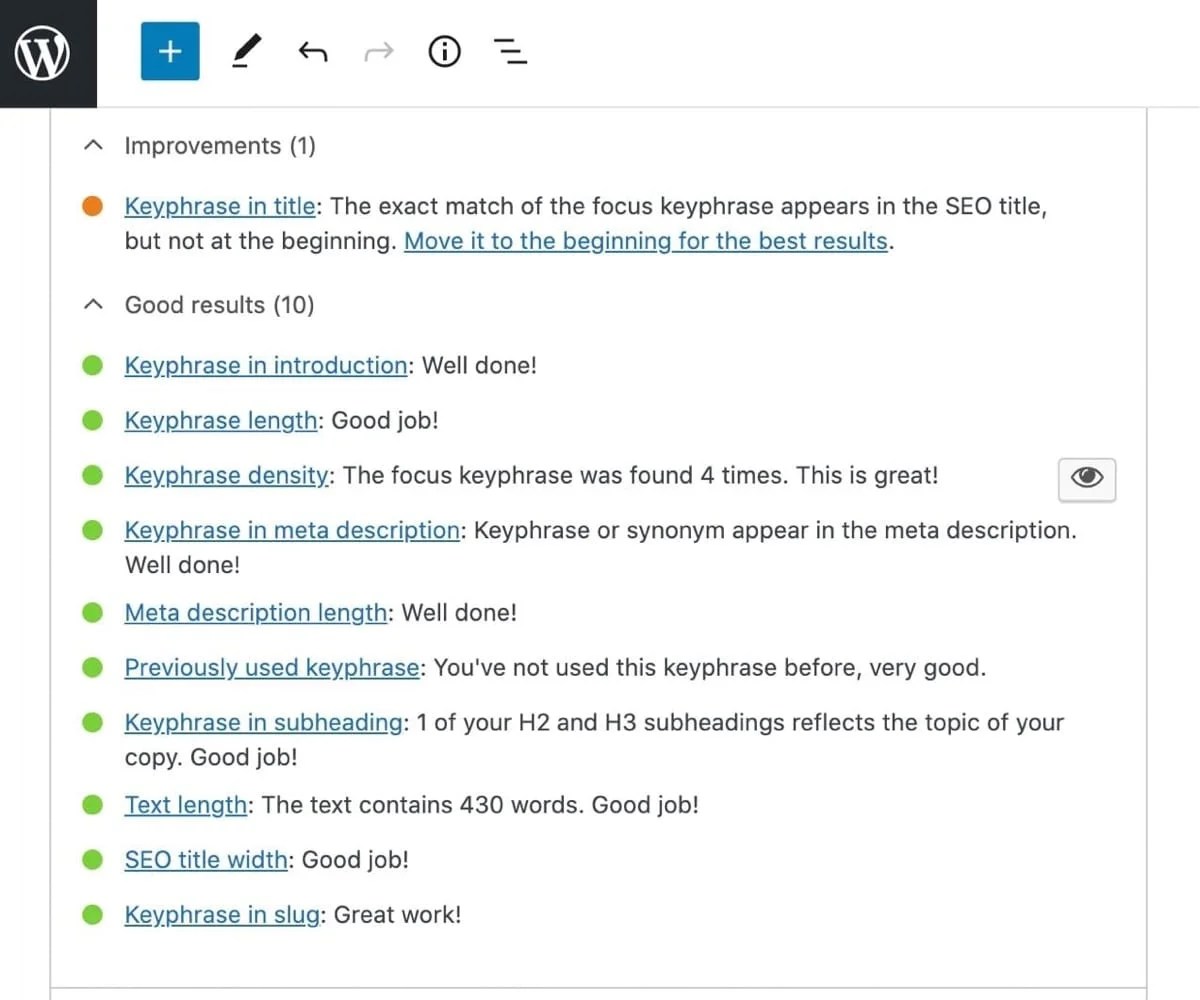
Yoast SEO will warn you if your keyword density is too high. You can then take action to resolve this problem, like replacing instances of your primary keyword with synonyms and variations.
Build a simple site architecture
About
It’s not necessary to do this on every single subheading and engagement is more important than keywords in this case. But when there is a natural fit for a relevant keyword in a subheading, use it.
Technical SEO involves fine-tuning your site’s performance, security, and navigation, part of your visitors’ experience. Content SEO relates to on-page and off-page keyword optimization, things your site visitors actually see. Off-site SEO is all about boosting your site’s reputation in the eyes of the search engines. How often people discuss and link to your site plays a role in where search engines place you in results.
Most search engines use algorithms to sniff out websites that engage in this blocklisted technique. If you’re found guilty, then expect to drop in the search engine rankings. Google may even remove you from their SERPs completely.
- Above ground pools (category page).
- Round above ground pools (subcategory page).
- 27 ft. round above ground pool (individual product page).
Autofill is a great source of long tail keywords and is faster to use than keyword research tools. Plus, it’s free.
Also add keywords to the body of your pages. Generally, you don’t need to stress too much about keyword density or putting an exact number of each keyword.
Security is another big consideration when it comes to ecommerce SEO. Site visitors and search engines hate unsafe or hacked websites. And Jetpack includes lots of powerful security features like:
For more ecommerce SEO tips, strategies, and advice, we offer multiple guides and resources. Check out these SEO tips for ecommerce stores and our advanced guide to product-based SEO.
Ecommerce websites typically feature a large number of product pages, and each of these should feature a primary keyword along with other keywords related to that product.
For example, if you sell a replacement part or a unique tool that goes with very specific products, someone looking for that part may type the actual code into Google’s search bar. If you use that code number on your product page, that shopper may find your site at the top of the search rankings.
Improve your product and ecommerce category pages
It’s difficult to pinpoint all of the criteria that search engines use to rank websites. They’re also prone to changing their algorithms. In some ways, ecommerce SEO can feel like a mystery box.
WordPress offers some ecommerce SEO features out of the box, but you can get even more control over your on-page optimization with a plugin like Yoast SEO.
For example, maybe someone finds their way to the “above ground swimming pools” page, and on that page, you start talking about how to keep your pool clean. Including a link to “pool cleaners” makes sense.
A confusing site architecture makes this hard. Why? Because unless you’re running paid ads — such as pay per click (PPC) or social media ads that link to specific product pages on your site — many consumers will arrive via the homepage, a blog post, or another page.
Start an ecommerce blog
Identifying new target keywords is simpler than you might imagine. Here are several types of keywords and how to find them:
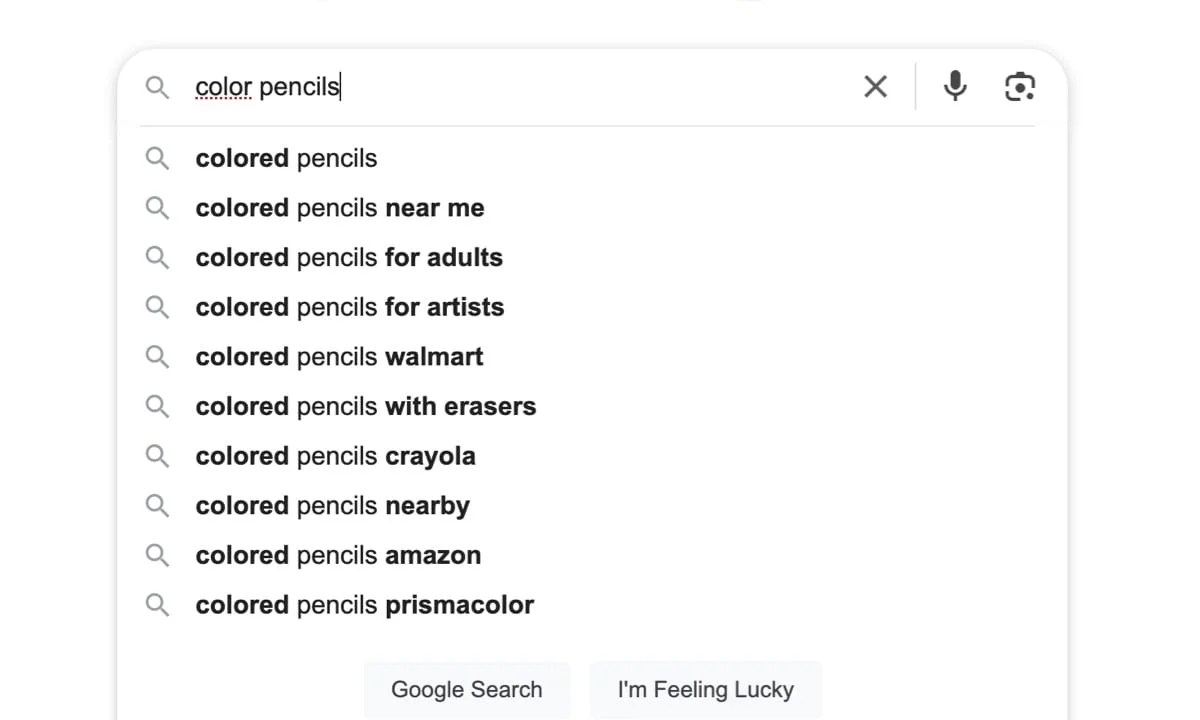
Adding “pencils” to the search creates an entirely different list, however:
If you’re going to excel at ecommerce SEO, it’s vital that you use the right keywords. This means performing keyword research to identify the words and phrases that people use when searching for content that’s related to your store.
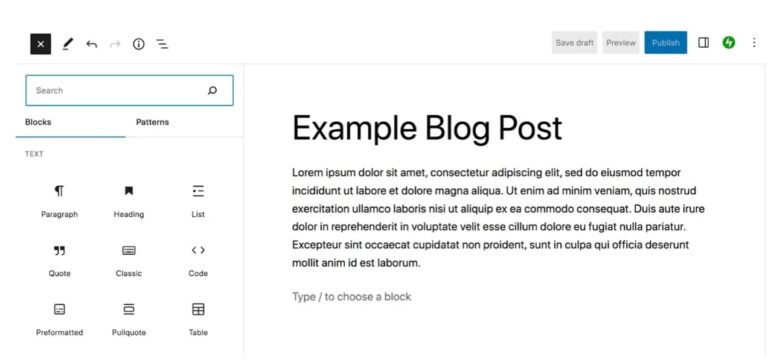
Yoast adds a new section to the WordPress block editor. Here, you can add your target keyword, which Yoast calls the focus keyphrase.
Search engines use a combination of crawlers, indexes, and algorithms to determine what results it will show for each keyword.
The short preview (usually 155-160 characters) that appears underneath your page title on the search results page.
For example, it makes more sense to target “best fast laptops for sale,” rather than “world’s fastest laptop.” The first search indicates a desire to make a purchasing decision, while the second may just be someone who’s curious about computers.
You can use a technical SEO technique called canonical tags.

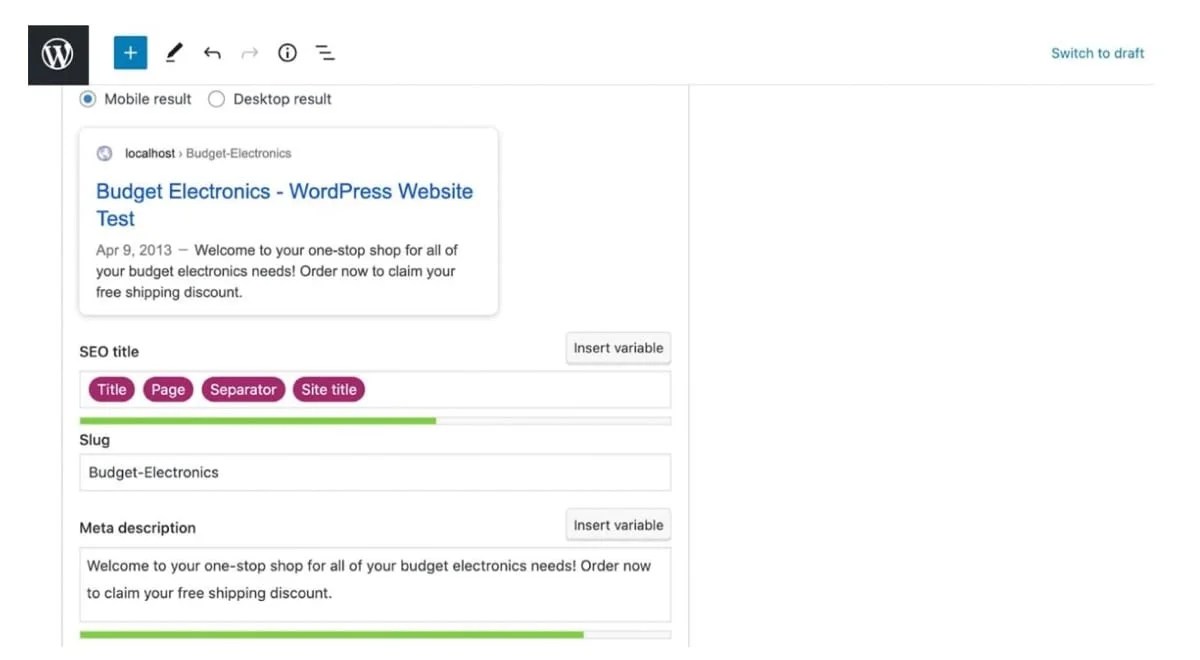
The image below shows how these appear in search results. The page title is the large blue text and the meta description is the smaller text beneath it.
In addition, your URL should reflect your primary keyword and as little else as possible. You don’t want whole sentences as URLs. The simpler the URL, the clearer it will be to Google and others what that web page is about.
However, the most important thing is to be descriptive, clear, and relatively brief. Don’t write a whole paragraph.
Manage duplicate pages
With this list of keywords, Google is telling you that a lot of other consumers have searched for these terms. And that means you can create new web pages featuring those keywords and have a high degree of confidence that you can attract some organic traffic to your site.
But where on your web pages should you use keywords? Does it matter? And how many times should you use a primary keyword?
A text-based description of images and graphics that helps Google understand them. Screen readers also read alt text aloud to site visitors with visual impairments so they can understand the picture. So, when you optimize images, you improve both search rankings and accessibility.
So the search engine will then arrange all of the content about spaghetti in an attempt to provide the best results for each individual searcher.
As an ecommerce website, you sell products. This sets your site apart from blogs, informational sites, government sites, news sites, and more.
For example, you might use the following to describe the image above: “A reflective glass table with a short white coffee cup filled with black coffee, sitting on a white saucer.”
Ecommerce consumers want a simple shopping experience. They want to find what they’re looking for without too much hassle, select their items, pay, and move on with their life.
You may already have a few keyword ideas, like your most popular products or the brands that you stock. These can be a great starting point for your ecommerce keyword research. You can enter these words into a tool like Semrush’s Keyword Magic or Keyword Overview.
Because not every customer knows they’re a customer yet. But if your website sells products that solve a problem or address a need, you can be sure that some people are searching for those solutions.
A big aspect of technical SEO for ecommerce is to reduce your duplicate content. Google disfavors pages and websites that feature too much repetitive content. The primary reason for this is to stop plagiarism, but also to prevent websites from publishing tons of pages that have basically the same words.
1. Yoast SEO
And hopefully you can see why keywords are the foundation for SEO. Using appropriate keywords on your site — on every page — is where ecommerce SEO begins. This includes your homepage, product pages, category pages, blog posts, about page, pricing page, and any other informational web page on your site.
Every time someone performs a keyword search, the engine will scour its index for content that matches this particular query. If someone searches for “spaghetti recipe,” it’s likely that there are already millions of site pages in the index with content about this topic.
Write something.
Your first step into the world of ecommerce SEO is to identify the initial crop of words and phrases that you want to rank for, called keywords. You’ll then use this list of keywords in your online store’s headings, image alt tags, and other prominent areas that we’ll discuss in more detail shortly.
The title that appears in the search results for each page. Search engines typically display 50-60 characters.
A long tail keyword refers to a more specific phrase that will generate lower search volume, but is more valuable because of the search intent it implies or easier to rank for because there’s less competition.
Kevin Bates
Yoast also makes it simple to add your SEO title and meta description, as well as edit each page’s URL, which is referred to as a slug.
2. Jetpack
Their feet hurt. Their water bottle leaks. They can’t keep their food cold or fresh. Their backpack doesn’t fit right. They’re getting eaten alive by mosquitos.
- A content delivery network (CDN) that can deliver your site from the server that’s geographically closest to each shopper.
- Video hosting, so you can efficiently showcase ad-free videos without weighing down your site.
- Optimizations specifically for Core Web Vitals.
- Super fast site search that directs shoppers where to go.
A blog attracts customers who are looking to solve a problem, rather than simply buy a product. They are buying the solution to their problem.
- Spam prevention tools to protect your comment, contact, and review forms.
- Brute force attack protection to block bad actors from forcing their way in.
- An activity log to monitor everything that happens on your site.
- Real-time malware scans with one-click fixes for the majority of known issues.
- A website application firewall (WAF), which acts as a security guard for your store.
- Real-time backups so you can quickly get up and running again if something does go wrong.
For long tail keywords, it’s not always possible to fit the whole phrase because of character limits. In that case, opt for what seems to be the most important parts of the phrase.
Then, simply fill in the alternative text field.
If you’re trying to drive more local customers to your ecommerce store, you may be interested in our ultimate guide to local SEO.
Publish frequent, relevant content
This is why your product pages should have healthy amounts of copy. Don’t just throw up some product images and a headline and decide that the page is completed.
We discussed this earlier, but as a reminder, this is the blue text that shows up in search results, but is not visible to people on your site. The page title is a ranking factor in Google’s search algorithm. That means you want to do whatever you can to get your primary keyword in your page title.
Keywords are at the heart of SEO because these are the phrases people type when searching online to find or learn about something.
Optimize your site for speed
Criteria used by Google to determine search rankings. A higher rank in Google depends on the content and keywords on the web page itself, the number and quality of backlinks to your site, and technical aspects like the user experience — speed, security, and your site architecture.
While it’s a fast way to rank for desired terms, it’s going to be more profitable long-term to rank organically and receive “free” traffic over and over again.
Build external links
So its search volume will be lower, but its value is much higher, because it will attract potential customers for your ecommerce business. “Above ground swimming pools” is also a long tail keyword. An ecommerce website could create a whole category page around above ground pools to attract site traffic looking for that product.
Category pages should link to subcategories, which should link to product pages.
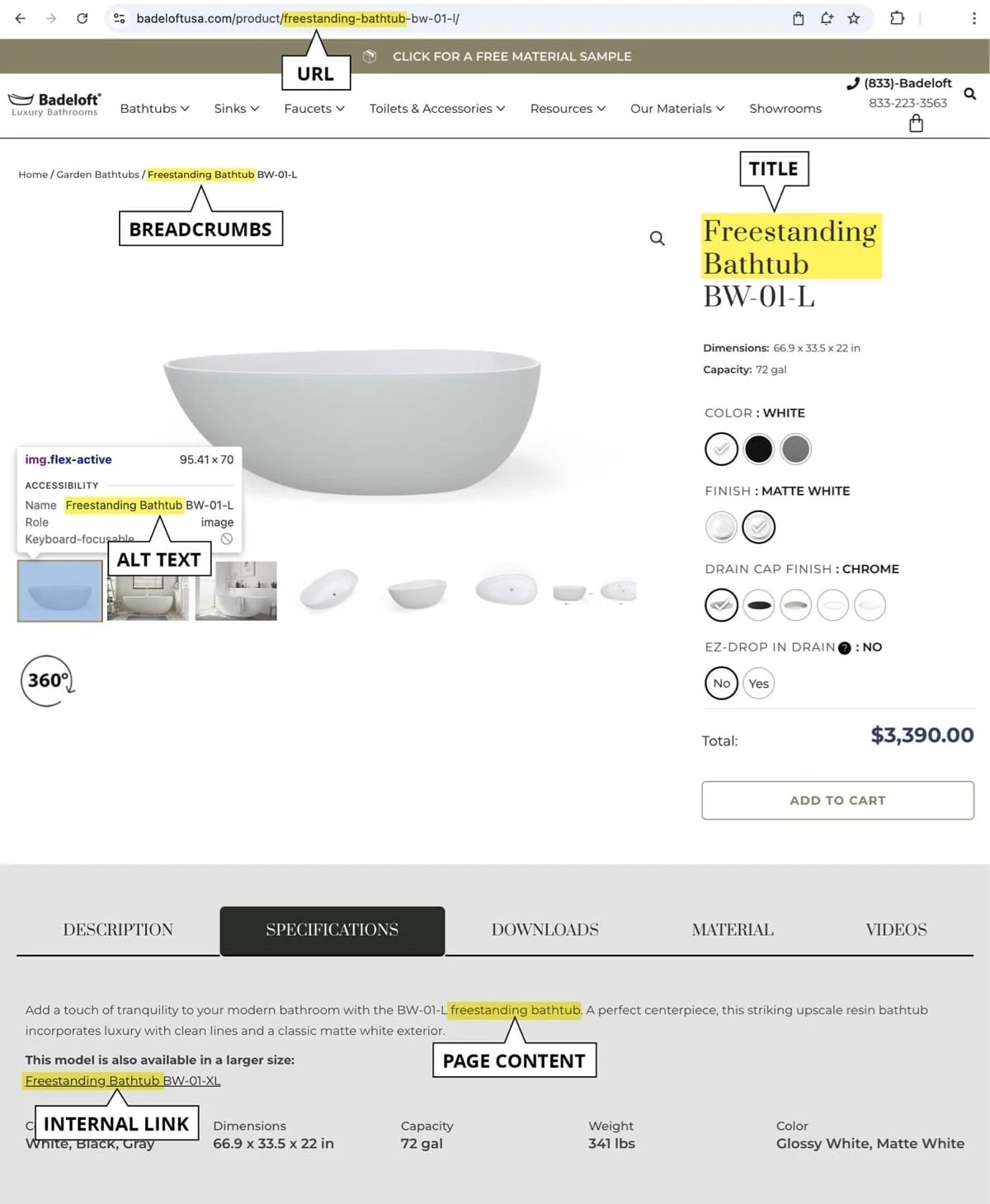
Here’s a quick diagram outlining some of the places you can incorporate keywords:
Then, underneath those pages, you have your actual product pages.
Don’t stuff keywords
For most ecommerce stores, it makes sense to opt for keywords that have a decent search volume and low competition. But this is always easier said than done, which is why you need to learn how to find new keyword ideas.
But instead of just posting them and calling it a day, you’ll want to explicitly tell Google what those pictures show.
Ecommerce SEO is a huge topic that spans many different areas. With this in mind, here’s a quick guide to some crucial ecommerce SEO strategies:
Don’t focus too much on crawlers
Spend time working on the specific structure that best fits your ecommerce business. But the point is, with this approach, you can scale a website without adding complicated pathways and pages that are impossible to find.
Each page needs a headline, a URL with the specific keyword for that page, subheadings, images, descriptions, a marketing messaging that gets a shopper excited about making a purchase, and, most important of all, a simple way to get there.
Keyword stuffing is the practice of loading your content with keywords in an attempt to manipulate your ecommerce store’s ranking. This can damage the customer experience, particularly if you use these phrases out of context, or repeat them in a way that feels unnatural.
Don’t forget about website security
Can you see the revenue potential of those keywords?
If your ecommerce store sells high-quality water bottles, you could write an array of blog posts around leaky water bottles: Why Water Bottles Leak. How to Stop Water Bottles from Leaking. Types of Water Bottles that Don’t Leak.
With canonical tags, you can tell the search engines that the main page that matters ends with /productname and it doesn’t need to go any further than that.
Use Google Search Console
Yoast SEO also provides a report with suggestions for how to improve your ranking and displays your keyword density.
You can optimize URLs in the WordPress editor. Simply click the gear icon at the top right, expand the Permalink section, and change the URL slug to whatever you’d like.
As you’ll see in a bit, ecommerce SEO is pretty similar to general SEO, but there are a few elements unique to ecommerce that you’ll want to address to maximize site traffic and sell more products.
That’s a good ecommerce SEO strategy, because it enhances the clarity of the page you’re linking to. You can do the same thing with external links, which go to outside sources. Google appreciates external links, when appropriate, because they provide additional information and help site visitors.
When performing ecommerce keyword research, it’s important to keep search intent in mind as you determine your primary target keywords.
Jetpack once again comes in handy as it boasts protection against brute force attacks, which occur when a malicious third party bombards your login page with hundreds of username and password combinations. It also offers features such as malware scanning, real-time backups, an activity log, and spam protection.
Or if they do land on a particular product page that’s not the one they wanted, they’ll go to your homepage or a main category page and proceed from there.


WordPress automatically generates a URL based on your permalink settings, but you should optimize this link by removing common stop words such as the, an, and that. These contribute little to your ecommerce SEO and eat into your character allowance.
Underneath those categories you have subcategories. Under clothing you might have kids, men’s, women’s, shirts, shoes, etc. Under sports gear, you might categorize by sport.
By consistently publishing helpful and valuable content on your site, you can build a library of unique information that shows Google you’re an authority on a given subject matter. Google’s goal is to serve results to searchers that will be the most useful to them.